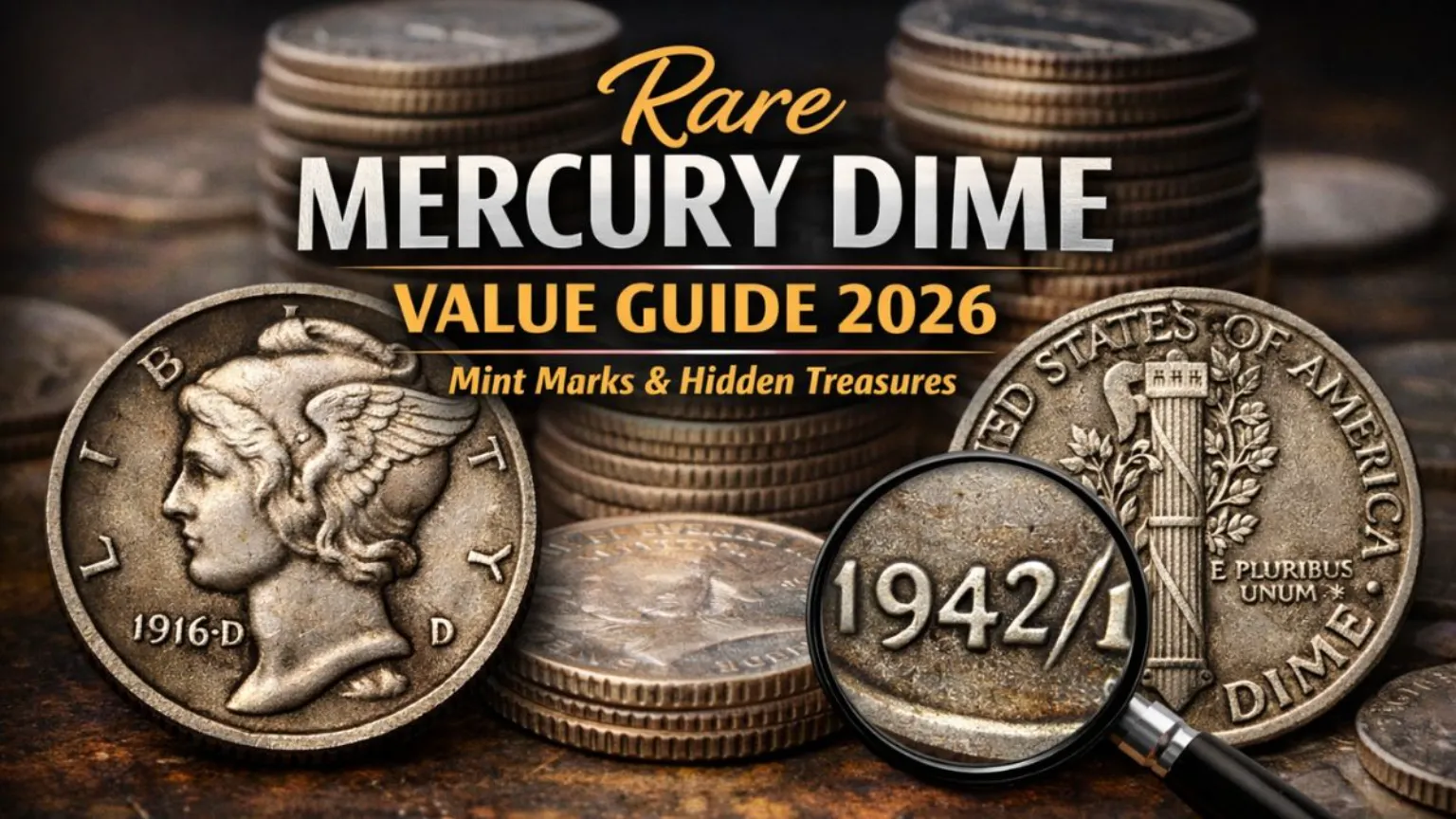
If you have ever checked your pocket change or inherited an old coin collection, you might be sitting on a small fortune without even realizing it. Mercury dimes, officially known as the Winged Liberty Head dimes, remain one of the most loved collectible coins in the United States. Even in 2026, collectors are actively searching for rare editions, special mint marks, and error coins that can sell for hundreds or even thousands of dollars. These tiny silver coins were minted betweeno from 1916 to 1945, and their historical value combined with limited supply has made them highly desirable among coin enthusiasts.
Why Mercury Dimes Still Matter in 2026
Collectors are drawn to Mercury dimes not just for their beauty but also for their silver content and historical importance. Designed by Adolph A. Weinman, the coin features Lady Liberty wearing a winged cap, symbolizing freedom of thought. Many people mistake the design for the Roman god Mercury, which is how the coin got its popular nickname.
Today’s collectors focus heavily on condition. A well-preserved coin with clear details is always more valuable than one that has been heavily circulated. Coins graded “Mint State” or those with minimal wear often fetch premium prices at auctions. Rising interest in tangible assets has also encouraged new collectors to enter the market, pushing demand even higher.
Rare Mint Marks That Can Make You Rich
One of the most important things to check on a Mercury dime is the mint mark. This small letter appears on the reverse side of the coin near the bottom and tells you where the coin was produced. Certain mint marks are far rarer than others, making them extremely valuable.
Here are some of the most sought-after Mercury dimes in 2026:
- 1916-D is considered the holy grail of Mercury dimes because only about 264,000 were minted
- 1921 and 1921-D coins are rare due to low production during an economic slowdown
- 1942/41 overdate error coins are famous among collectors
- 1931-D is another tough find in high grades
- Proof versions from the early 1940s can command impressive prices
Many collectors recommend using a magnifying glass when checking mint marks because the difference between a common coin and a rare one can come down to a tiny letter.
Key Mercury Dime Specifications
Before you evaluate a coin’s worth, it helps to understand the basic specifications. Mercury dimes were made with high silver content, which alone gives them intrinsic value even if they are not rare.
| Feature | Details |
|---|---|
| Years Minted | 1916–1945 |
| Metal Composition | 90% Silver, 10% Copper |
| Weight | 2.5 grams |
| Diameter | 17.9 mm |
| Edge | Reeded |
| Designer | Adolph A. Weinman |
Because silver prices fluctuate, the melt value of these coins changes over time. However, rare dates almost always sell for far more than their metal value.
Hidden Treasures: Errors and High-Grade Coins
Some of the biggest surprises in coin collecting come from mint errors. These are coins that were accidentally produced with mistakes, making them unique and highly collectible. Overdate coins, doubled dies, and off-center strikes are especially valuable if authenticated by a professional grading service.
Another factor that can dramatically increase value is the “Full Bands” designation. This refers to the horizontal bands on the fasces design on the back of the coin. If the bands are sharply defined and fully separated, collectors are willing to pay a premium because it indicates exceptional strike quality.
It is not unusual for a common Mercury dime worth a few dollars in average condition to jump into the hundreds when graded with Full Bands. Rare coins in near-perfect condition have even crossed the five-figure mark at major auctions.
How to Check If Your Mercury Dime Is Valuable
If you think you may have a valuable coin, start by examining the date and mint mark carefully. Avoid cleaning the coin, as this can lower its value significantly. Collectors prefer coins with natural aging rather than polished surfaces.
Consider getting the coin professionally graded. Certified coins are easier to sell and often command higher prices because buyers trust the authenticity and condition. Storing coins in protective holders also prevents scratches and environmental damage.
- Look for low mintage years
- Check for clear details and minimal wear
- Watch for mint errors
- Verify the coin has not been cleaned
- Compare recent auction prices
Coin collecting continues to grow in popularity, and Mercury dimes remain a favorite entry point for both beginners and experienced collectors. Their combination of history, artistry, and potential financial reward keeps them relevant even decades after production stopped.
As 2026 unfolds, experts suggest that demand for rare coins could remain strong, especially as more people view collectibles as alternative investments. So the next time you come across an old dime, take a closer look — that small piece of silver might just be a hidden treasure waiting to be discovered.